
PART III: ECONOMIC DAMAGE, E-COMMERCE, CUSTOMS, SUPPLY CHAINS, NARCOTICS AND CRYPTO-FINANCE
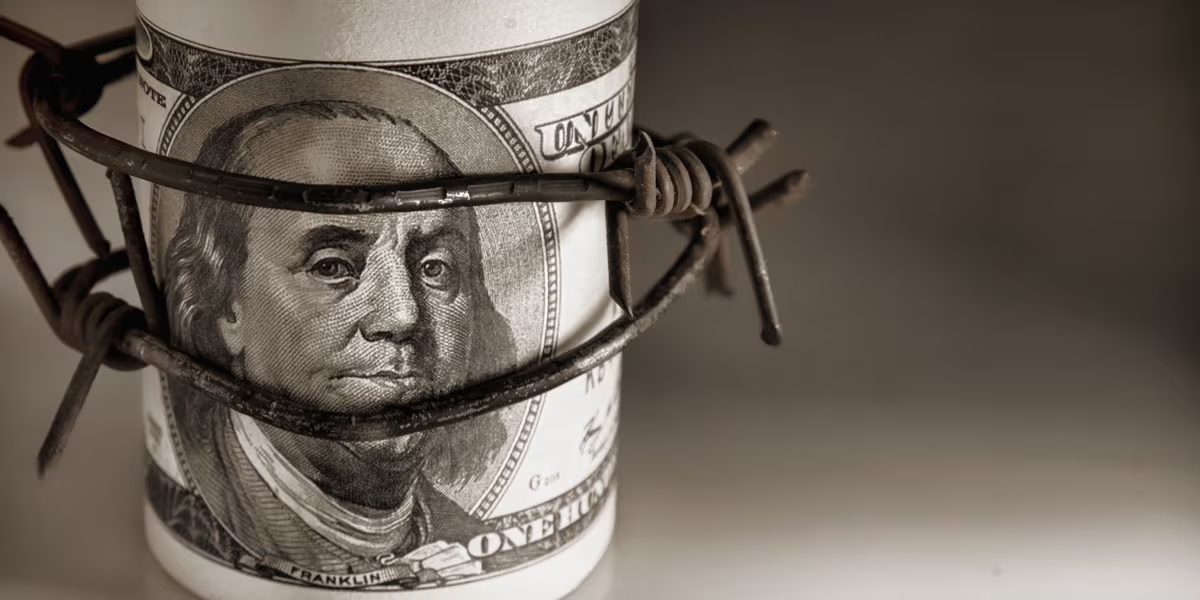
The Economic Structure Beneath Taliban Rule
Afghanistan's economy showed modest aggregate growth during 2025 and 2026, but that growth did not translate into broad improvements in living standards.
The World Bank projected 4.3 percent GDP growth for 2025 in one development update, while UNDP, using a different methodology and series, estimated real GDP growth at 1.9 percent for 2025. Both organizations emphasized that population growth, poverty, trade imbalance, restricted female participation and reduced aid continued to undermine living standards.World Bank
By May 2026, the World Bank estimated real GDP growth at 4.8 percent but said rapid population expansion and structural constraints meant living standards were still falling.World Bank
UNDP reported that around 28 million people, roughly three quarters of the population, could not meet basic needs in 2025, while Afghanistan's trade deficit reached approximately $11.3 billion.UNDP
Internet Blackouts and Commercial Damage
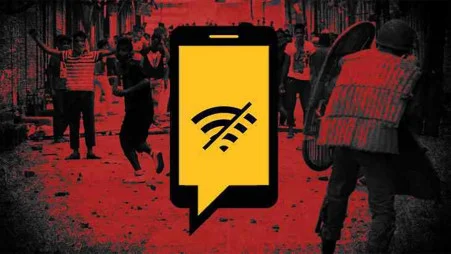
The September 2025 shutdown damaged banking, e-commerce, aviation, education, remittances, government administration and online employment.
UNAMA explicitly warned that the communications ban jeopardized economic stability and critical banking and financial systems.unama.unmissions.org
Reuters documented Afghan women who had built embroidery, tailoring and other businesses around online customers and saw their operations severely disrupted once fibre connections were cut.Reuters
Human Rights Watch likewise reported disruption of commerce, healthcare, media and education.Human Rights Watch
Quarterly E-Commerce Losses: What Can and Cannot Be Claimed
There is no authoritative public dataset that provides exact quarterly dollar losses for Afghan e-commerce caused by Taliban internet shutdowns in 2025 or 2026.
No World Bank, UNDP, UNAMA, Reuters or Afghan official dataset reviewed for this report provides reliable quarterly e-commerce losses attributable solely to internet restrictions.
Therefore, figures such as "Q3 losses were exactly $X million" should not be published unless supported by a disclosed methodology and underlying transaction data.
A defensible forensic calculation would require payment-gateway records, merchant revenues, telecom traffic, banking settlement volumes, customs-processing delays, airline cancellations and online-platform transaction data.
Until those records are available, the appropriate conclusion is that the shutdown caused material economic losses whose precise national value remains unquantified.
The Wider Cost of Excluding Women
The economic consequences of Taliban social policy are more measurable.
UNDP estimated that restrictions on women and girls could cost the economy nearly $920 million between 2024 and 2026.UNDP
A 2025 UNDP assessment said female workforce exclusion had already made Afghanistan approximately $2 billion poorer in GDP terms since the Taliban returned to power.UNDP
Women-owned businesses are especially important because UNDP found that roughly 80 percent of women-led enterprises depended on their business revenues as their primary source of income.UNDP
Customs Revenue and State Finance
The Taliban have consolidated control over customs and taxation.
A UN sanctions-monitoring report covering earlier revenue patterns documented nearly $2.93 billion in official revenue, including more than $1 billion in tax revenue and roughly $1.19 billion in customs revenue for the relevant fiscal period.Digital Library
A later UN report stated that tax revenues and customs duties rose approximately 20 percent during 2025 through stronger enforcement, border management and higher imports, while Afghanistan remained heavily dependent on trade-related taxation and informal financial channels such as hawala.UN Official Document System
This makes customs data particularly important to any investigation of Taliban financial power.
Hardware Serial Numbers and Customs Forensics
The strongest method for identifying foreign technology entering Afghanistan would combine:
Manufacturer, model, serial number, MAC address, firmware version, invoice, exporter, consignee, freight forwarder, bill of lading, HS code, border crossing, importer and final end user.
Afghan Telecom's documented Huawei equipment and ZTE procurement provide starting points, but open-source materials do not provide complete serial-number inventories.
Investigators should not invent or extrapolate serial numbers.
Actual attribution requires equipment photographs, warehouse or installation records, procurement documents and manufacturer distribution data.

Drug Revenue: A Complex and Changing Picture
The relationship between the Taliban and Afghanistan's narcotics economy requires careful time separation.
Earlier UN sanctions-monitoring reporting documented Taliban-linked revenue from taxation of opium trafficking, cannabis and methamphetamine. A 2023 Monitoring Team report referred to profits captured by traffickers and taxation structures and described drug production and smuggling as significant sources of illicit revenue.UN Official Document System
However, the Taliban announced an opium cultivation ban in 2022, and UNODC subsequently documented a dramatic reduction in cultivation.
The 2025 Afghanistan Opium Survey estimated farmers' opium income at approximately $134 million, down 48 percent from $260 million in 2024.United Nations Office on Drugs and Crime
It is therefore inaccurate to treat old Taliban narcotics-finance estimates as if they automatically describe 2025 or 2026.
The relevant present-day investigation should distinguish between official anti-narcotics enforcement, residual trafficking, existing stockpiles, methamphetamine production, cross-border smuggling and any corruption or taxation involving individual Taliban networks.
Armed Groups and the Security Economy
Afghanistan continues to host or face multiple armed groups.
A 2025 UN Monitoring Team report assessed that Tehrik-e Taliban Pakistan maintained around 6,000 fighters in Afghanistan and stated that the Taliban continued to provide the TTP with logistical and operational space and financial support, while the Taliban rejected related accusations.UN Official Document System
The same report said Al-Qaida continued to maintain a presence in Afghanistan and assessed that the Taliban continued to host and support the group, while Taliban authorities denied that Al-Qaida remained present.UN Official Document System
These competing claims should remain attributed rather than presented as uncontested fact.
Crypto-Forensics and Taliban-Linked Finance
Cryptocurrency is a legitimate area of inquiry, but the current public evidence is substantially thinner for the Taliban than it is for some other sanctioned actors.
There is no reliable public blockchain dataset reviewed for this report that establishes a comprehensive list of Taliban-controlled USDT-TRON wallets.
Accordingly, publishing alleged Taliban wallet addresses without OFAC, UN, law-enforcement or other strong attribution would be irresponsible.
A sound investigation should begin with officially designated individuals and entities, exchange records, known fundraising addresses, law-enforcement seizures and sanctions notices, then construct blockchain graphs around verified identifiers.
The relevant forensic indicators include repeated counterparties, exchange deposit clusters, bridge transfers, TRON and Ethereum stablecoin activity, OTC brokers, high-risk exchange exposure and links to sanctioned entities.
But blockchain proximity alone does not prove Taliban control.
Hawala, Informal Finance and Transfer Nodes
The UN has repeatedly noted Afghanistan's heavy reliance on hawala because formal international banking channels remain constrained.UN Official Document System
This does not make hawala inherently criminal. It is a longstanding legitimate financial mechanism used by millions of Afghans.
The security problem arises when the same informal infrastructure is used to obscure sanctions evasion, militant finance, narcotics proceeds or unregistered cross-border flows.
Investigations into transfers reaching Europe or North America therefore require transaction-specific evidence, not generalized suspicion of Afghan remittance systems.
PART IV: HUMANIZING DIGITAL BLACKOUTS, WESTERN SECURITY RISKS AND THE INTERNATIONAL RESPONSE
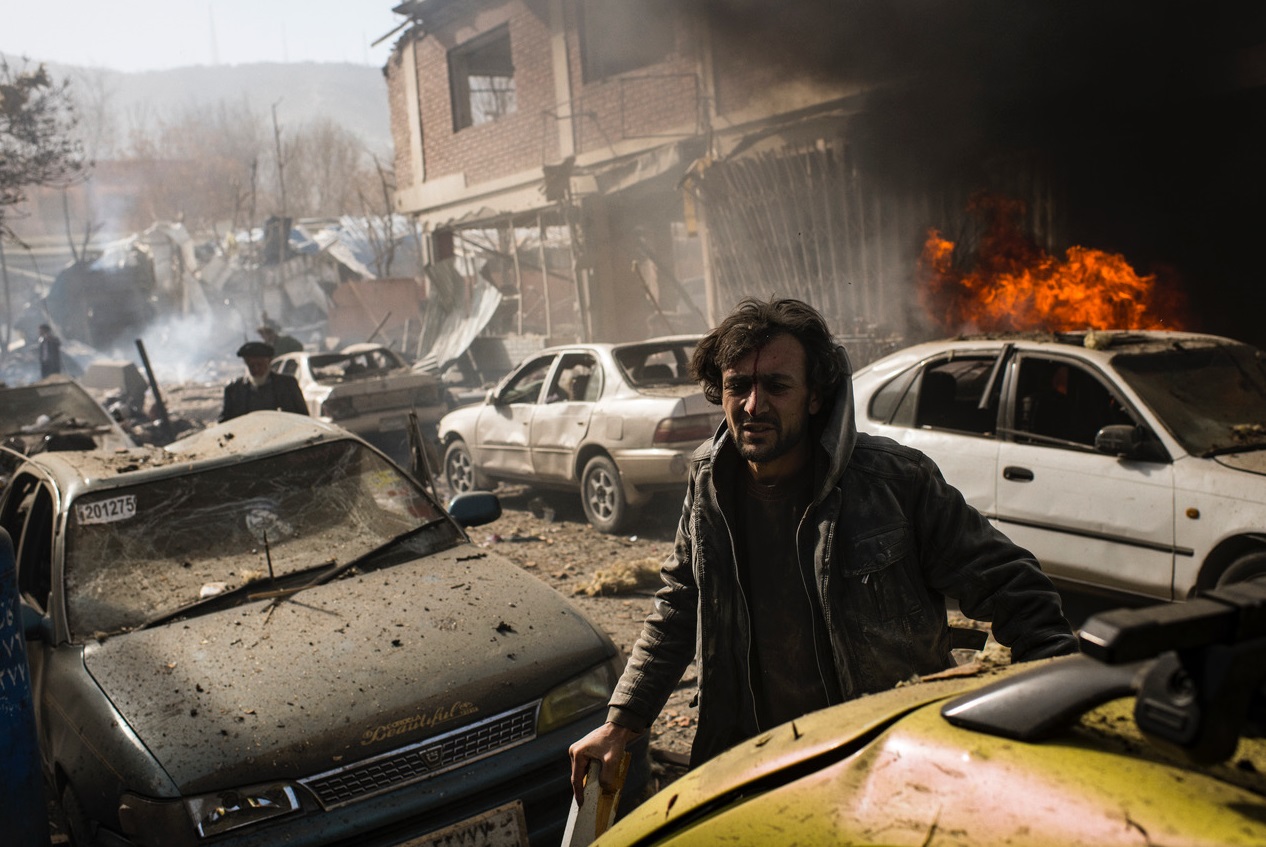
When a Communications Blackout Becomes a Humanitarian Event
The September 2025 blackout did far more than silence social media.
UNAMA warned that it affected banking, emergency services, medical care, aviation, financial transfers and remittances.unama.unmissions.org
Cloudflare documented disruption affecting customs offices, government registration services, banks, students and businesses.Cloudflare Blog
This is the central lesson of digital repression in Afghanistan: a fibre switch can become a political instrument, but its consequences spread immediately into healthcare, commerce, family contact and emergency response.
Healthcare
Afghanistan's health system was already severely fragile.
UNDP reported that more than 440 health facilities closed or reduced operations in 2025 because of funding shortages, while one in three female-headed households reported difficulty accessing needed healthcare.UNDP
Against that background, nationwide telecommunications disruption increases risk by interfering with referrals, appointments, emergency coordination, supply chains, remote consultations and information exchange.
It is reasonable to describe that as a public-health risk.
It is not scientifically sound, however, to claim that the September blackout directly caused a specific death without case-specific medical evidence.
The Impact on Women Is Disproportionate
Women and girls had increasingly relied on the internet because many physical avenues of education and employment had been closed to them.
Reuters documented women whose home businesses and online educational access were disrupted by the fibre bans.Reuters
Access Now described digital access as one of the last remaining lifelines for women and girls excluded from education and many forms of employment.Access Now
The blackout therefore amplified existing gender restrictions rather than affecting a politically neutral communications environment.
Risks to Europe and the United States
Afghanistan's instability has direct relevance to Europe and the United States, but those risks should be described through identifiable mechanisms rather than generalized claims.
The principal channels are terrorism, transnational militant networks, illicit finance, narcotics trafficking, sanctions evasion, irregular migration, cyber-enabled propaganda and procurement of dual-use technology.
The UN Security Council continues to maintain a dedicated sanctions regime and Monitoring Team concerning Taliban-associated individuals and entities.United Nations
At the same time, millions of ordinary Afghans seeking refuge, education or employment abroad must not be conflated with intelligence or militant actors.
Nationality, refugee status, student status or migration status is not evidence of hostile activity.
Counterintelligence must be based on conduct, associations, financing, undisclosed state links, operational tasking and corroborated evidence.
Foreign Influence and Institutional Vulnerability
Authoritarian or militant organizations may attempt to exploit legitimate channels such as commercial companies, nonprofit structures, informal financial networks, procurement agents, online propaganda networks or diaspora intermediaries.
That possibility is a legitimate national-security concern.
But claims that Taliban agents have broadly penetrated American or European government institutions require case-specific evidence.
A responsible investigative framework should therefore ask:
Who funds the organization, who controls its accounts, who directs its personnel, what undeclared foreign relationships exist, what communications link the individual to a sanctioned organization, what transactions support that relationship and what operational conduct demonstrates direction or control?
Without such evidence, broad allegations risk obscuring real threats.
China, Russia and Iran: Strategic Engagement with Taliban Afghanistan
The three states have different relationships with Taliban-controlled Afghanistan.
Russia took the most significant diplomatic step by formally recognizing the Taliban government in July 2025.Reuters
China maintains significant commercial and infrastructure interests and Chinese-origin telecom equipment remains present in Afghanistan.
Iran is a major trade partner and transit route, with the World Bank identifying Iran as Afghanistan's largest import source during the first half of FY2025.The World Bank
These relationships can increase Taliban access to trade, infrastructure, telecommunications equipment, political legitimacy and alternative economic corridors.
But the evidence must remain differentiated. Recognition by Russia, trade with Iran and Chinese telecommunications involvement are not the same thing as proof of a coordinated three-state program controlling Afghanistan.
What Europe and the United States Can Actually Investigate
The most productive investigative targets are concrete and documentable:
Telecom procurement contracts, sanctioned suppliers, customs declarations, intermediary companies, beneficial ownership, freight records, payment routes, hawala brokers linked to sanctioned actors, cryptocurrency addresses with official attribution, dual-use technology exports, arms seizures, narcotics cases, travel patterns of sanctioned figures, front charities, shell companies and communications infrastructure.
Those datasets create evidence.
General suspicion does not.
Red-Flag Indicators for Technology and Procurement Investigations
The strongest warning indicators include mismatches between declared end user and actual installation site, telecom hardware shipped through unrelated intermediaries, unusually complex re-export routes, invoices using generic descriptions for specialized network equipment, repeated shipments through free-trade zones, newly formed companies with no obvious operating history, procurement involving sanctioned vendors and telecom equipment appearing inside state networks without a transparent contract trail.
In Afghanistan, the documented presence of Huawei equipment, the ZTE procurement award, reported Russian 4G infrastructure and growing state control over fibre networks make telecom procurement an especially important area for continued investigation.Ministry of Comm & Info Tech
Final Assessment
Afghanistan under Taliban rule in 2025 and 2026 presents an interconnected system of judicial coercion, gender exclusion, morality policing, security control, public punishment and increasingly centralized communications authority.
The courts impose death sentences and corporal punishment; the morality police regulate daily behavior; security institutions detain critics and former officials; women and girls remain systematically excluded from education and much of public life; minorities face discrimination and targeted violence; and the state has demonstrated the technical and administrative ability to disconnect much of the country from global communications.
The economic consequences reinforce the social ones.
Women lose online businesses and education, banks lose connectivity, remittances become harder to access, flights are disrupted, customs systems fail and emergency services become more difficult to coordinate.
Foreign technology is part of this environment, but attribution must remain precise. Huawei and ZTE equipment are documented in Afghan telecommunications infrastructure; reported Russian systems warrant further examination; cross-border fibre links connect Afghanistan physically to neighboring states. None of those facts alone establishes corporate responsibility for Taliban abuses.
Similarly, the financial investigation must distinguish older Taliban narcotics financing from the post-2022 opium decline, legitimate hawala from sanctions evasion and ordinary cryptocurrency use from verified militant wallets.
The investigative path forward is therefore evidence-driven:
Follow the court records, follow the telecom contracts, follow the serial numbers, follow the customs documents, follow the fibre routes, follow the sanctioned entities, follow the financial transfers and preserve every evidentiary link.
Sources and Reference Material
United Nations Assistance Mission in Afghanistan, Human Rights Monitoring and Reporting\
UNAMA Human Rights Monitoring and Reporting
UNAMA, Human Rights Situation in Afghanistan, January to March 2026\
UNAMA January–March 2026 Human Rights Update
International Criminal Court (ICC), Afghanistan Situation and Warrants\
Human Rights Watch, World Report 2026, Afghanistan\
Human Rights Watch: Afghanistan 2026
Human Rights Watch, Five Years Under Taliban Rule\
HRW: Afghanistan Five Years Under Taliban Rule
Amnesty International, Taliban Criminal Procedure Regulation\
Amnesty: Criminal Procedure Regulation of the Courts
Amnesty International, Afghanistan Human Rights Overview\
Amnesty International: Afghanistan
UNDP, Afghanistan Socioeconomic Review 2024–2025\
UNDP Afghanistan Socioeconomic Review
International Labour Organization, Afghanistan Labour Market 2026\
ILO: Afghanistan Labour Market Five Years After Taliban Takeover
World Bank, Afghanistan Development Update and Economic Monitoring\
World Bank: Afghanistan Economic Monitors
UNODC, Afghanistan Opium Survey 2025\
UNODC Afghanistan Opium Survey 2025
Access Now, Afghanistan Internet Shutdown\
Access Now: Taliban Internet Blackout
Cloudflare, Q3 2025 Internet Disruptions, Afghanistan\
Cloudflare: Afghanistan Internet Disruption Analysis
Reuters, Afghan Women and the Fibre-Optic Ban\
Reuters: Afghan Women Lose Internet Lifeline
Reuters, Nationwide Afghan Internet Shutdown\
Reuters: Afghanistan Internet and Mobile Services Down
Afghan Telecom, National Fibre-Optic Network and International Connections\
Afghan Telecom: Fibre-Optic Network
Afghanistan Ministry of Communications, ZTE DWDM Procurement Notice\
MCIT: ZTE Afghanistan Contract Award Notice
Afghan Telecom Technical Procurement Record Referencing Huawei DWDM Equipment\
MCIT/Afghan Telecom Technical Specification
UN Security Council, Taliban Sanctions Monitoring Team\
UN Security Council 1988 Monitoring Team
UN Security Council Monitoring Team, 2025 Report on Armed Groups in Afghanistan\
UN Monitoring Team Report S/2025/796
Reuters, Russia Formally Recognizes Taliban Government\
Reuters: Russia Recognizes Taliban Government
Research, investigation, compilation and preparation by the Editorial Team.